by Amy Rosenberg | Jul 14, 2014 | Digital Marketing, General, Posts, Public Relations
If you read the blog post about how we decided to change the company name to Veracity, you might have noticed that I’m a bit of a Hemingway freak. In the post I mentioned that I would explore how themes of luck and discipline, which are consistently used in his memoire “A Moveable Feast,” relate to the making of a marketing business.
Basically I just liked what he said about how the two related to writing and I was trying to cram it into the original post and it wasn’t working. I had to focus on the point I was trying to make, which was that the message about true and honest writing was important and related to us and was how the name Veracity emerged.
 I came up with the name Veracity in a café of sorts in our neighborhood, close to our home and work, where I must have been having good luck. Which is fitting because Hemingway often notes that he found luck at various times throughout his work day—especially while writing at certain Parisian cafes.
Beyond superstitious luck, like how he carried a rabbit’s foot in his pocket while working, he writes mostly about the luck that we have all tried to experience while working at coffee shops. This luck is all about flow. The music is at the right volume, the neighbors are not noisy, the chairs are comfortable and the coffee is good—you are able to work well without distraction.
But unfortunately it doesn’t always go this way. Hemingway comically recounts what distractions can do to creatives on page 91:
Some days it went so well that you could make the country so that you could walk into it through the timber to come out into the clearing and work up onto the high ground and see the hills beyond the arm of the lake….[the paragraph goes on to set the scene of what he’s writing about].
Then you would hear someone say, ‘Hi Hem. What are you trying to do? Write in a café?’
Your luck had run out and you shut the notebook. This was the worst thing that could happen. If you could keep your temper it would be better but I was not good at keeping mine then and said, ‘You rotten son of a bitch what are you doing in here…?’
I’m sure we have all too often experienced this, but hopefully we were more polite. When we serendipitously bypass the distracting coffee shop to settle in at a quiet café, is it pure luck? Or if we happen to take off our headphones just in time to overhear the coffee shop owner talking of needing someone to market her expansion, is that pure luck?
Of course not. We walked into the coffee shop already prepared. Consider how Hemingway’s themes of discipline come into play in the second chapter.
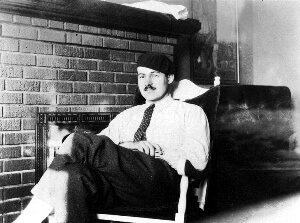 When I had worked well, and that needed luck as well as discipline, [it] was a wonderful feeling and I was free to walk anywhere in Paris.
I always worked until I had something done and I always stopped when I knew what was going to happen next. That way I could be sure of going on the next day.
Attempting to get a marketing company off the ground is definitely not the same as writing masterpieces, but I just love how he described his major artistic endeavors like just another day at work. He worked hard at it, just as we all should work hard at our jobs, and we can learn from his example.
This last quote of Hemingway’s, said to his wife after a successful stint at the race track, just about sums up how a mixture of good luck and steadfast tenacity can come into play in all of our professional lives, whether you are a writer, NBA player or launching a marketing company.
‘You said we were lucky today. Of course we were. But we had very good advice and information.” (pg. 56)
 Images used under this Creative Commons License.
by Amy Rosenberg | Jun 27, 2014 | Amy Talk, General, Posts, Public Relations
While deciding if marketing was right for me, I become a realtor for 4 years. Every day I thank myself for taking the leap into a career that I knew nothing about. Even though it led me to recognize marketing as my true path, my time spent as a realtor shaped how I run my business today. I didn’t know it at the time, but realtors are truly business owners, with the most professional and disciplined amassing a worth that typical “business owners” could only dream of.
How Being a Realtor Shaped the Way I do Business Today:
- Have thick skin. You will get burned (by everyone!). Be careful not to celebrate before signing the contract (or literally closing escrow in the case of a realtor). Also don’t take things too personally. It’s just business.
- Use detailed language in contracts and proposals. But not too detailed from a legal standpoint. 🙂 This is the point that led me to writing this blog post. I recently felt very (probably overly) adept at writing a proposal for a law firm—like I could protect myself and play with the big boys.
- Connect with people. What other people say and do is our greatest source of inspiration when attempting to market something. They also bring us all of our business. Get out and about!
- Pick up the phone. While email has its purpose, you really cannot effectively communicate complexities in text.
- Weather the storm. Imagine selling homes during the housing boom. Many people jumped on the bandwagon and got their real estate licenses. Imagine selling homes during the economic depression. This takes a certain kind of tenacity and skill that few realtors, or other professionals for that matter, have.
My point is that you never know where your professional path may take you. What might seem like an odd tangent, or even bump in the road, will probably serve as inspiration for you in another professional lifetime.
by Amy Rosenberg | May 16, 2014 | Amy Talk, General, Industry News, Posts, Public Relations
Tips for media interviewing, presenting and just talking with a human being.
It was an honor to present at the Northwest Credit Union Association’s Marketers Conference last week, but I’m sure I won’t be the first to say the star of the show was Anthony Huey of Reputation Management Associates. Over the course of three hours he delivered a fun, interactive presentation packed with media training and communication tips. I attempted to take notes but many of it is hard to convey as a camera was used with video being played back and Anthony’s suggestions peppered throughout the replaying.
But here goes, because you need to know this…
Time matters. Fill every second you get.
This doesn’t mean talk all the time! You have 10 seconds to answer questions with the press and 30 seconds to answer questions face-to-face. Even Barak Obama gets just 10 seconds to answer to press. If you go over with press they will just take what they want to create a 10 second sound-bite so you’ve completely lost control of the message.
This is important for everyone—whether you are a CEO trying to pitch a $2 million account or a soccer mom trying to get more field time for her kid’s league.
For example, how do you typically answer the question: “What do you do”? I always reply back with the short, yet firm, response of “I have a marketing firm.” And then I just leave it at that. Well think of all that time I’ve lost! That took about 3 seconds. I have 27 more seconds to fill in any regular conversation. I need to think about whom I am talking with and how they can help me with my agenda.
CONTROL the conversation. Not the other way around.
You cannot wait for the person to ask you the question that will lead you to your talking points. You must fight and take control. Possess an agenda. Satisfy irrelevant questions quickly and then say what you want to say. Use words like “for example” because it forces you to use examples. Examples are good—this gets you to the “how” of it.
Be as succinct as possible. Time is important.
(more…)
by Mike Rosenberg | May 12, 2014 | Agency Life, Client Work, Digital Marketing, Posts, Public Relations, Resources
Create the Community Engagement Plan that Connects with Consumers
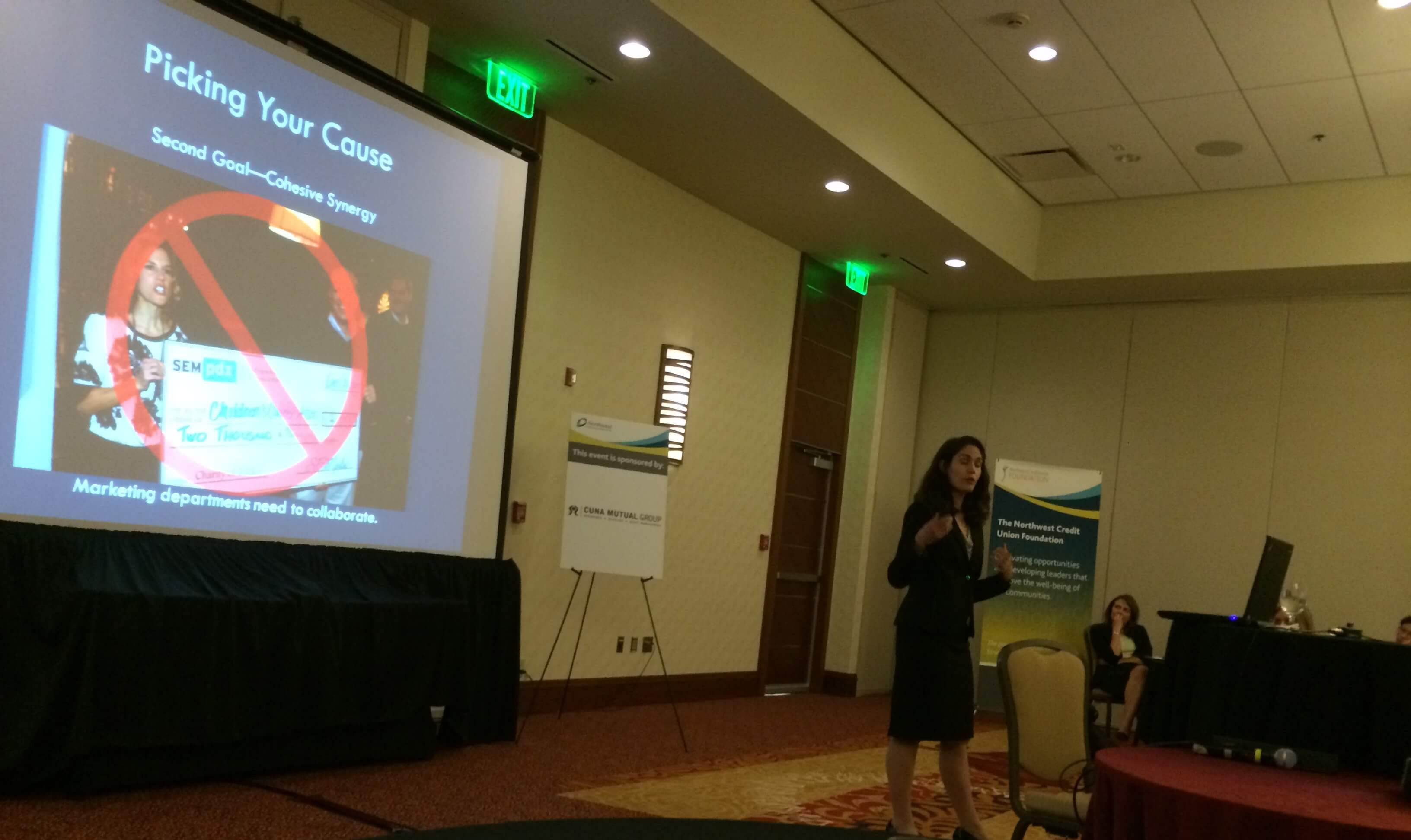
Amy Rosenberg, President of Veracity, presentation at 2014 Northwest Credit Union Association’s Marketing Conference. Amy provides actionable examples of how credit unions can create community engagement plans that connect with consumers through public relations, social media and community outreach.